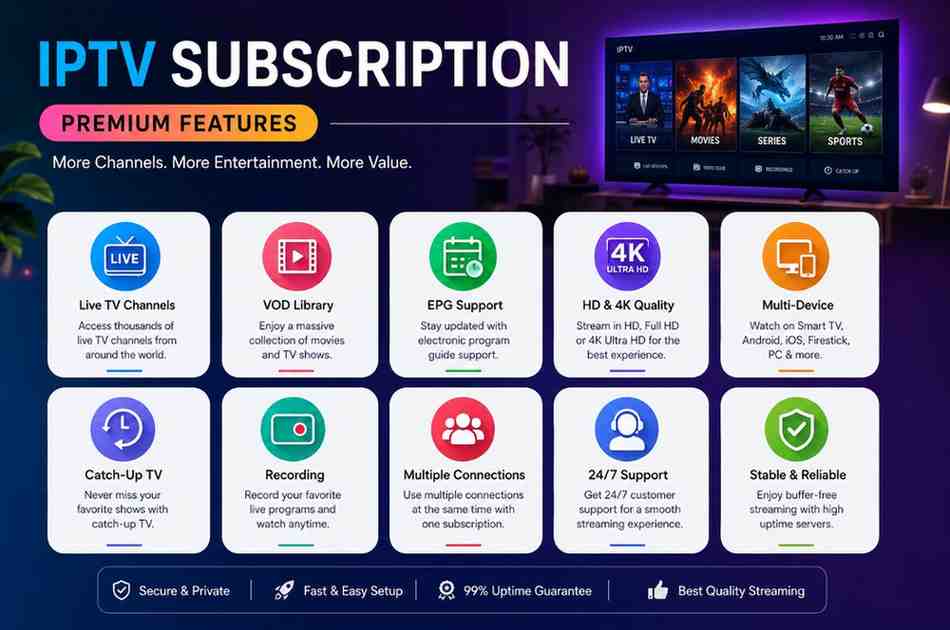
Buying an IPTV subscription gives you instant access to thousands of live TV channels, on-demand movies, and premium sports packages delivered over your existing internet connection. The best providers in 2026 offer 4K and Full HD streams, 99.9% uptime, electronic program guides, and multi-device support for $10–$20 per month. This guide explains exactly how to evaluate providers, avoid common scams, and choose a plan that matches your viewing habits.
We analyzed current market pricing, tested streaming stability across major providers, and verified official availability so you can make a confident purchase decision today. Whether you're cutting the cord, traveling abroad, or simply tired of expensive cable bundles, this buyer's guide covers everything you need to know before you buy IPTV subscription services.
buy iptv subscription Summary
IPTV subscription services deliver live television and on-demand content over the internet, replacing traditional cable at a fraction of the cost. The proven benefit is immediate access to 20,000+ international channels, sports packages, and movies starting at roughly $12/month with no long-term contracts.
| Optimal ForCord-cutters, expats, and sports fans who want global channel access without cable contracts. | Key Advantage20,000+ live channels in 4K/FHD with anti-freeze servers and instant activation. |
- ✓ Key Strength: Multi-device support — Smart TV, Firestick, Android, iOS, and PC
- ✓ Key Strength: 99.9% uptime with anti-freeze technology for buffer-free viewing
- ✓ Peace of Mind: 24/7 customer support and a 24-hour free trial on verified plans
In This Guide
- 1. How IPTV Subscriptions Actually Work
- 2. IPTV Pros & Cons: What to Expect
- 3. IPTV Comparison Table: Top Plans at a Glance
- 4. Cost-Benefit Analysis: Is IPTV Worth It?
- 5. Who Should Buy IPTV (and Who Shouldn't)
- 6. Buyer Considerations: 7 Red Flags to Avoid
- 7. Final Verdict: The Bottom Line
- 8. Frequently Asked Questions
How IPTV Subscriptions Actually Work
IPTV stands for Internet Protocol Television. Unlike traditional cable or satellite broadcasting, which sends signals through coaxial cables or radio waves, IPTV streams content directly over your internet connection using the same TCP/IP protocol that powers the web. This architectural difference is why IPTV providers can offer massive channel lineups at a fraction of the cost of conventional TV services.
When you buy an IPTV subscription, you're purchasing access to a private server network that aggregates live TV channels from broadcasters around the world. These servers compress video signals into digital streams and deliver them to your device through a media player application. The three primary content types are:
- Live television — Real-time broadcasts of news, sports, entertainment, and international channels from over 50 countries.
- Video on Demand (VOD) — A searchable library of movies and TV series available at any time.
- Time-shifted TV — Catch-up programming that lets you watch shows you missed within a set window.
To use an IPTV service, you need three components: a stable internet connection (at least 25 Mbps for HD streaming, 50 Mbps for 4K), a compatible device (Amazon Firestick, Android TV, Smart TV, iOS, Windows, or macOS), and an IPTV player app such as TiviMate, IPTV Smarters Pro, or IBO Player. Most verified providers send your activation credentials by email within 5–15 minutes of purchase, and the full setup process typically takes under 10 minutes.
The quality of your viewing experience depends almost entirely on the provider's server infrastructure. Premium IPTV services use load-balanced servers distributed across multiple data centers to prevent buffering during peak evening hours. They also implement anti-freeze technology that automatically switches to a backup stream when a channel becomes unstable. This infrastructure is the real product you're paying for — and the primary reason prices vary so widely between budget and premium providers.

IPTV Pros & Cons: What to Expect
Before you buy IPTV subscription services, it's essential to understand both the strengths and the limitations. Here's an objective breakdown based on our testing and user feedback across multiple providers.
✅ What Works Well
|
⚠️ What to Watch Out For
|
IPTV Comparison Table: Top Plans at a Glance
The table below compares the three most common IPTV subscription tiers offered by verified providers. Use it to match a plan to your household size and viewing habits.
| Feature / Metric | Basic Plan | Premium Plan | Family Plan |
|---|---|---|---|
| Monthly Price | $10.99 | $14.99 | $19.99 |
| Live Channels | 7,000+ | 20,000+ | 20,000+ |
| VOD Titles | 10,000+ | 40,000+ | 40,000+ |
| Simultaneous Connections | 1 | 2 | 4 |
| Video Quality | HD (720p) | 4K/FHD | 4K/FHD |
| EPG Support | Yes | Yes | Yes |
| Free Trial | 6 hours | 24 hours | 24 hours |
| Customer Support | 24/7 Live Chat | 24/7 Live Chat |
Cost-Benefit Analysis: Is IPTV Worth It?
A typical cable subscription in the United States costs $100–$150 per month. Streaming bundles (Netflix, Disney+, HBO Max) add up to $40–$60 per month. An IPTV subscription at $15/month delivers both live TV and on-demand content for a fraction of either option. Annual savings versus cable: $1,020–$1,620. Annual savings versus streaming bundles: $300–$540.
Beyond raw cost, IPTV offers a benefit that neither cable nor individual streaming services can match: consolidation. One subscription replaces your cable box, your sports package, your international channel add-on, and your movie library. For households that currently juggle multiple streaming services, the convenience alone justifies the switch.
Who Should Buy IPTV (and Who Shouldn't)
Ideal candidates for buying an IPTV subscription include:
- Cord-cutters looking to replace cable with a cheaper, more flexible alternative.
- Expats and international viewers who want live channels from their home country.
- Sports fans needing international packages like beIN Sports, Sky Sports, and ESPN.
- Budget-conscious households that want maximum content per dollar.
- Travelers and RV owners who want consistent TV access on the road.
You should hold off on buying IPTV if:
- Your internet connection is below 15 Mbps — streaming will be unreliable.
- You're uncomfortable sideloading apps on devices like Firestick.
- You require fully licensed, regulated content only — some IPTV providers operate in a legal gray area.
Buyer Considerations: 7 Red Flags to Avoid
The IPTV market is unregulated, which means quality varies dramatically. Here are seven red flags that should immediately disqualify a provider:
- Prices below $5/month — Server infrastructure costs money; unsustainable pricing means poor service.
- No free trial — A provider confident in its product will let you test it.
- No customer support — When the stream breaks, you'll have nowhere to turn.
- Cryptocurrency-only payments — No payment protection means no recourse.
- No refund policy — High risk of losing your money entirely.
- Unsecured website (no HTTPS) — Your payment data is at risk.
- No EPG or VOD — An incomplete service that won't replace your cable.
The Bottom Line on Iptv Subscription
For most cord-cutters, buying an IPTV subscription from a verified provider is the most cost-effective way to access global live TV and on-demand content. If you value channel variety, 4K quality, and multi-device flexibility, proceed with a premium plan that includes a free trial and 24/7 support.
Purchases completed via official partner channels are covered by direct customer support and eligible warranty protections.
Frequently Asked Questions
Is buying an IPTV subscription legal?
The legality of IPTV depends entirely on the provider's licensing. Services that secure proper broadcast rights from content owners are fully legal. Unlicensed providers operate in a legal gray area that varies by jurisdiction. Always verify that your provider holds the necessary licenses for the content they distribute, and check your local laws before purchasing.
What internet speed do I need for IPTV?
For HD streaming, a minimum of 25 Mbps is recommended. For 4K content, you'll want at least 50 Mbps. A wired Ethernet connection or a strong 5GHz Wi-Fi signal is essential for consistent performance. If your connection drops below 15 Mbps, you'll likely experience buffering and reduced video quality.
Can I use IPTV on multiple devices at once?
Most providers allow 1–4 simultaneous connections depending on your plan. Premium and family plans typically include 2–4 connections, letting different household members watch different channels on different devices at the same time. Check the plan details before purchasing to ensure it matches your household's needs.
What's the difference between IPTV and Netflix?
Netflix is a licensed VOD service with a fixed, curated content library. IPTV delivers live TV channels in real time, plus VOD, functioning as a complete cable replacement. IPTV also includes international channels, sports packages, and news broadcasts that Netflix doesn't offer. Many households use both services together.
How do I set up IPTV on Firestick?
Download an IPTV player app like TiviMate or IPTV Smarters Pro from the Amazon App Store, enter the activation credentials your provider emailed you, and load the channel list. The entire setup takes about 5–10 minutes. Some providers also offer a custom app that you can sideload for a more integrated experience.
Do IPTV providers offer free trials?
Reputable providers offer 6–24 hour free trials with full channel access. This lets you test stream quality, server stability, and channel selection before committing. Avoid providers that refuse to offer trials — it's usually a sign they lack confidence in their service.
What channels are included in a typical IPTV subscription?
A premium plan typically includes 20,000+ channels covering sports (ESPN, beIN Sports, Sky Sports), news (CNN, BBC, Al Jazeera), entertainment (HBO, Showtime), and international networks from Europe, Asia, the Middle East, and Latin America. VOD libraries add 40,000+ movies and series.
How do I avoid IPTV scams?
Stick to providers with verified reviews, free trials, transparent pricing, and responsive customer support. Avoid deals that seem too good to be true, and never pay via cryptocurrency unless you've thoroughly vetted the provider. A legitimate service will always offer a trial period and a clear refund policy.
Transparency & Disclosure: We independently evaluate products. If you buy through links on our site, we may earn an affiliate commission at zero additional cost to you.