This article contains affiliate links. If you buy through them we may earn a commission at no extra cost to you.
By Editorial Team · Updated 2026-09-25 · 11 min read
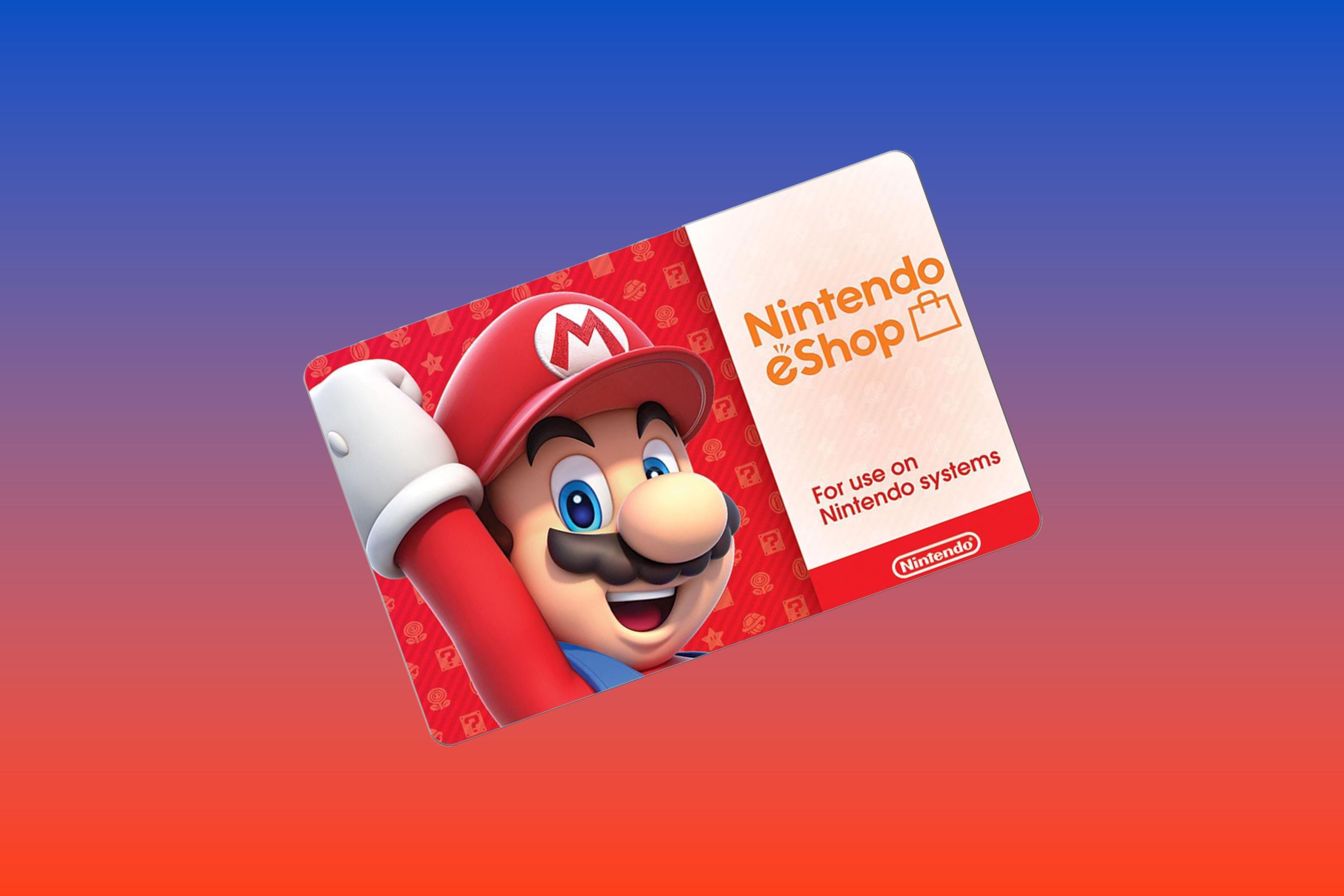
If you searched for "free Nintendo eShop codes," you probably want one thing: a valid code that adds credit to your Nintendo account without costing you anything. The honest answer is that legitimate free codes exist, but they are not as common — or as easy to get — as the search results suggest. Most of what you'll find online is either outdated, region-locked, or a straight-up scam. This guide walks you through what to check first, where real offers come from, and how to avoid losing money or your Nintendo account.
The image above shows what the eShop actually looks like when you're ready to redeem a code. It's the only place you should ever enter one. Everything else — third-party websites, email links, or social media forms — should be treated with suspicion until proven otherwise.
Key Takeaways
- Legitimate free Nintendo eShop codes are rare and almost always tied to official promotions, not random generators or social media giveaways.
- The safest way to get eShop money below face value is through verified retailers, My Nintendo rewards, or official bundle deals.
- If a "free code" offer requires your Nintendo account password, a survey, or a small "verification" payment, it's a scam — walk away.
In This Guide
Why People Regret Their Choice
People regret chasing free Nintendo eShop codes for three main reasons: wasted time, lost money, and compromised accounts.
The most common story goes like this: someone finds a "free code generator" website, enters their Nintendo username, completes a few surveys, and waits. The generator never works. Instead, the site harvests personal data or installs adware. In worse cases, users are asked to "verify" their identity by entering their Nintendo account password — and end up with a hijacked account.
Others regret buying discounted codes from unofficial resellers without checking the region. A code sold for the European eShop won't work on a North American account, and many sellers don't make that clear until after payment.
The lesson: free or discounted eShop credit is not worth your account security. Knowing the difference between a real promotion and a trap is the entire game.
What to Look For in a Legitimate Offer
When evaluating any offer for free Nintendo eShop codes, use these five criteria:
- Source transparency. Who is offering the code? Official sources include Nintendo itself, authorized retailers (Amazon, Best Buy, GameStop), and Nintendo's own rewards program, My Nintendo.
- No password requests. A legitimate code offer never asks for your Nintendo account password. Redemption happens through Nintendo's official website or console, not through a third-party form.
- Regional match. eShop codes are region-locked. A US code works only on a US Nintendo account. Always confirm the region before you commit.
- Reasonable terms. Legitimate free codes are usually small — $5, $10, or a few hundred Gold Points — and tied to a promotion or purchase. Nobody gives away $50 codes for nothing.
- No "verification" payment. A real free code doesn't require you to pay a small fee to "unlock" it. That's a classic scam pattern.
free nintendo eshop codes
View full specs, warranty, and current pricing from the seller.
link one →Where Free Nintendo eShop Codes Actually Come From
The market for Nintendo eShop codes has shifted in recent years. Nintendo has scaled back some of its older promotional programs, but a few legitimate avenues remain:
- My Nintendo rewards still offer small amounts of eShop credit in exchange for Gold Points earned through game purchases.
- Official sales and bundles sometimes include bonus eShop credit when you buy a console or game.
- Retailer promotions occasionally discount eShop gift cards — for example, a $50 card for $45 during holiday sales.
- Trade-in programs at stores like GameStop can convert unused games into store credit, which you can then use toward eShop cards.
What has not changed: the internet is still full of fake generators, survey scams, and social media accounts promising free Nintendo eShop cards in exchange for follows or "verification." Those are not market opportunities; they're traps.
The pros of pursuing free eShop codes:
- You save money on games you were already planning to buy.
- You can stack the savings with Nintendo's regular eShop sales.
- If you already earn My Nintendo points through normal purchases, converting them to credit takes almost no extra effort.
The cons and risks:
- Most "free code" offers are scams designed to harvest personal data.
- Region-locking can make a code useless even if the code itself is genuine.
- Sharing account details puts your Nintendo account and payment methods at risk.
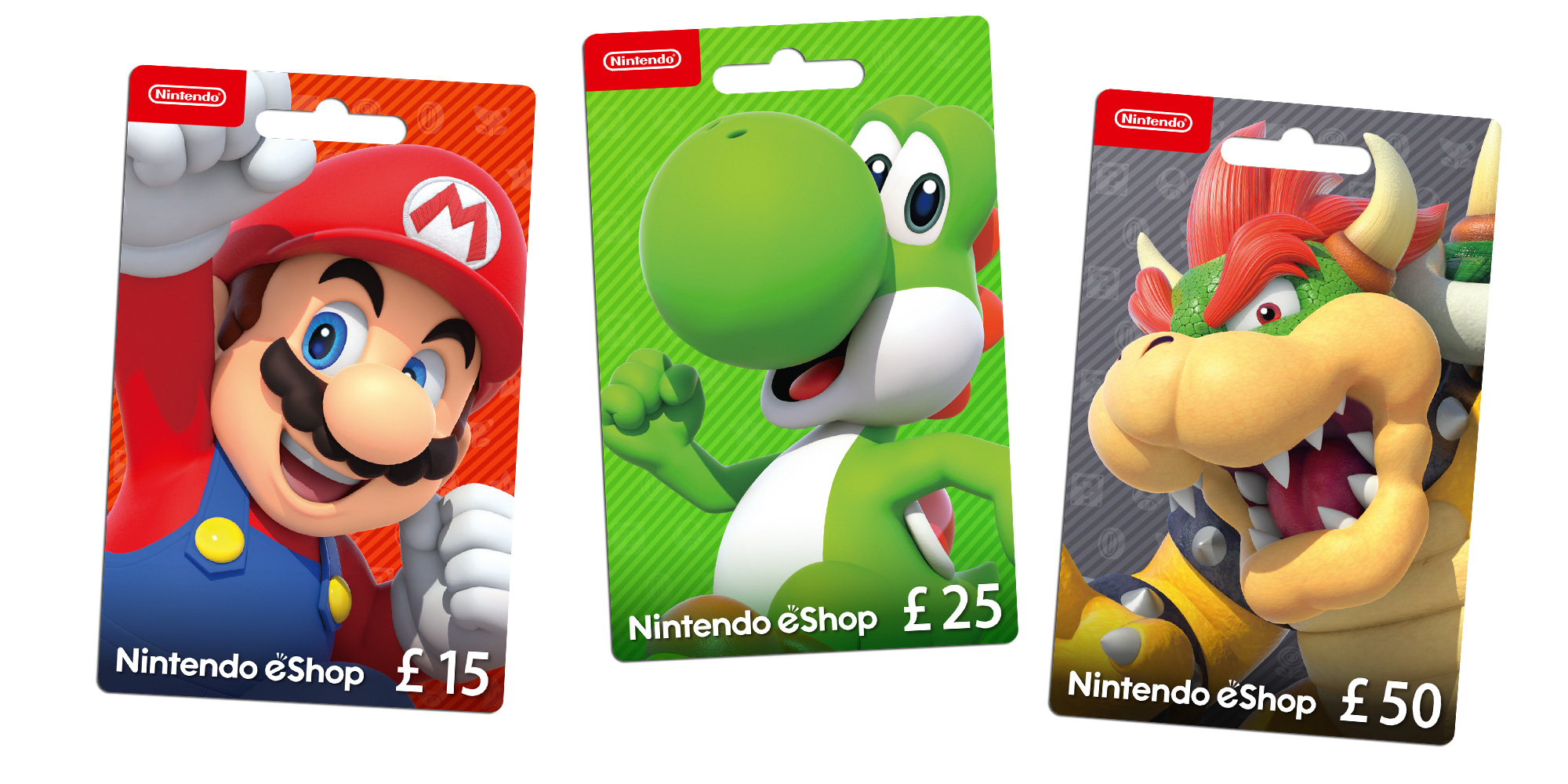
The cards above are what legitimate eShop credit looks like: official branding, clear denominations, and a code that you redeem directly on Nintendo's platform. Any offer that doesn't match this format deserves extra scrutiny.
Questions to Ask Before You Commit
Before you enter your email, username, or payment details anywhere, ask these six questions:
- Is this an official Nintendo channel? Check the URL, the handle, and the domain. Nintendo uses nintendo.com — not "nintendo-free-codes.xyz."
- What do they want in return? If the answer is "your password," "a small fee," or "50 surveys," stop.
- What's the code's region? Ask before buying or entering anything. A mismatch means the code is worthless to you.
- What's the code's value? Legitimate free codes are typically small. If someone promises $100 in free credit, be suspicious.
- Can other people verify this offer? Search the offer name plus "scam" or "legit." If you find warnings, trust them.
- Does the code expire? eShop codes have expiration dates. A code that's been sitting in a drawer for years may no longer work.
Warning Signs That Scream "Scam"
Some red flags are so common that you should treat them as automatic disqualifiers:
- "Unlimited codes" — No legitimate system produces unlimited free codes. Nintendo controls the distribution.
- Password requests — Nintendo will never ask for your password to deliver a code.
- Survey walls — Completing 10 surveys to unlock a code is a data-harvesting scheme.
- Urgency and countdowns — "Only 5 codes left!" is pressure tactics, not reality.
- Fake testimonials — Screenshots of "verified users" who got free codes are easy to fake.
- Payment for "shipping" or "processing" — A free code costs nothing to deliver.
If you see any of these, close the tab. The cost of engaging is far higher than the value of any code.
Legitimate vs. Risky Sources
Here's a quick comparison of the sources you'll encounter when searching for free or discounted Nintendo eShop codes. Keep this table handy — it covers the most common offers and how to evaluate them.
| Source | Risk Level | What You Actually Get | Bottom Line |
|---|---|---|---|
| Official Nintendo promotions | Low | Free codes during events or with hardware bundles | Legitimate, but rare |
| My Nintendo rewards | Low | Small amounts of eShop credit via Gold Points | Legitimate and consistent |
| Authorized retailers | Low | Discounted gift cards during sales | Legitimate, check region |
| Code generator websites | Very high | Nothing — usually malware or data theft | Scam |
| Social media giveaways | Medium | Often fake or contest-only | Verify before engaging |
| Third-party resellers | Medium | Discounted codes, sometimes invalid | Use buyer protection |
| Gift card exchange platforms | Medium | Below-face-value codes from other users | Works, but verify the seller |
How to Maximize Your Purchase
Once you have a legitimate code — free or discounted — follow these steps to get the most out of it:
- Redeem it immediately. Codes expire, and entering them on your Switch or the Nintendo website takes less than a minute.
- Check the region before redeeming. If you bought a code for the wrong region, contact the seller before entering it. Once redeemed, it's tied to that region's account.
- Use your balance during sales. eShop credit is most valuable when you wait for a sale. Nintendo runs frequent sales on first-party and indie titles.
- Stack with Gold Points. When you buy a game with your credit, you'll earn Gold Points on the purchase, which can be used toward a future discount.
- Never share the code. A code is like cash — anyone who sees it can redeem it.
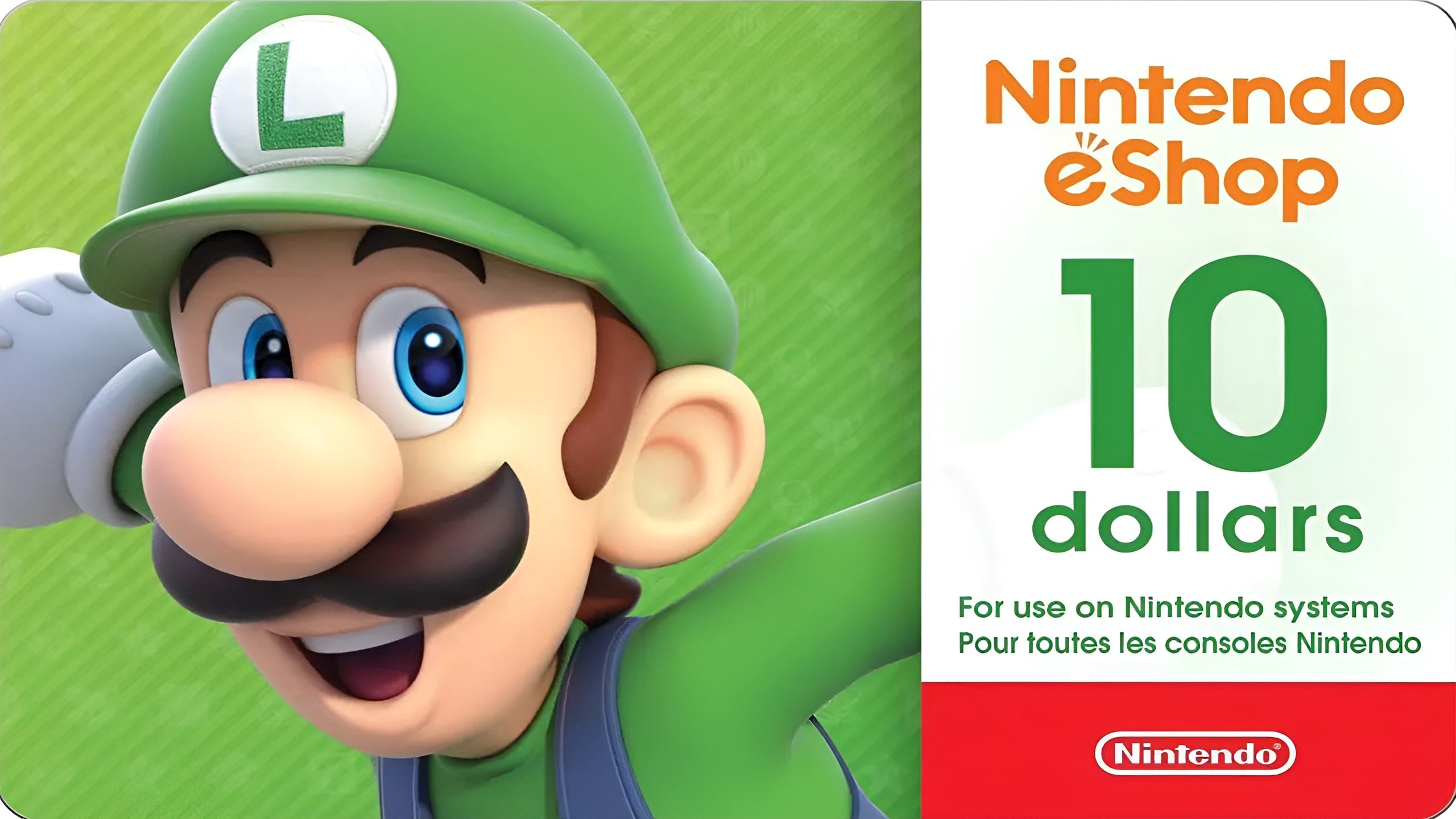
The card above shows the standard format for a digital Nintendo eShop card: a 16-character code and a PIN. Both need to stay private until you redeem them on your own account.
Recommendation by Budget
If your budget is $0: The most realistic path is My Nintendo. You earn Gold Points by buying digital games, and those points can be redeemed for eShop credit. It's slow, but it's real. You can also watch for official Nintendo promotions tied to events like Mario Day or the holidays.
If your budget is $10–$20: Look for discounted eShop gift cards at authorized retailers. During sales, you can sometimes find $20 cards for $17–$18. This gives you more value per dollar without the risk of unofficial channels.
If your budget is $50 or more: Wait for a retailer promotion or bundle. Nintendo often includes eShop credit with console bundles, and some retailers offer bonus credit during Black Friday or Prime Day events.
For most people, the smartest move is to buy a discounted eShop card from a verified retailer rather than chase free Nintendo eShop cards from unknown sources. The difference in price is small; the difference in risk is enormous.
The Verdict
Free Nintendo eShop codes can be legitimate when they come from official promotions or trusted reward programs, but most "free code" offers online are scams. If you want to stretch your gaming budget without risking your account, stick to verified sellers and treat any code that requires personal data as a red flag.
link oneThis link goes to the seller's official page. If you buy through it we may earn a commission at no additional cost to you. Our assessment is written independently.
Frequently Asked Questions
Are free Nintendo eShop codes real?
Yes, but they're rare and almost always tied to official Nintendo promotions, My Nintendo rewards, or retailer events. The "free codes" you see on random websites or social media posts are usually scams designed to collect personal data or install malware. A legitimate free code never requires your password or a payment.
Can you get free Nintendo eShop gift cards without a survey?
Legitimate offers don't use surveys. My Nintendo gives you eShop credit in exchange for Gold Points, which you earn by purchasing games. Some retailers also run promotions where you get bonus eShop credit with a qualifying purchase. If a site asks you to complete surveys to "unlock" a gift card, it's a data-collection scheme.
Does Nintendo ever give away free eShop codes?
Yes, Nintendo occasionally includes eShop credit as part of promotions — for example, bonus credit with the purchase of a Switch console or a game, or special event giveaways. These are announced on Nintendo's official website or through its official social media channels. Nintendo does not randomly email codes or run "generator" promotions.
How do I redeem a Nintendo eShop code safely?
Go to the Nintendo eShop on your Switch, select "Redeem Code" from the menu, and enter the 16-character code. You can also redeem codes through the Nintendo website on your account page. Always make sure you're on nintendo.com or the console's eShop app — never enter a code on a third-party website.
Are Nintendo eShop code generators safe to use?
No. There is no such thing as a working eShop code generator. These sites are designed to trick you into completing surveys, downloading malware, or entering your account credentials. No generator can create valid codes because Nintendo's codes are generated and validated server-side. Treat any "generator" as a scam.
Why do some free eShop codes not work in my region?
Nintendo eShop codes are region-locked. A code purchased or obtained in one region (e.g., the US) will only work with a Nintendo account set to that region. If you try to redeem a code on an account from a different region, you'll get an error. Always confirm the region before buying or accepting a code.
What should I do if I bought a fake Nintendo eShop code?
If you bought from a marketplace like eBay or a third-party seller, open a dispute with the platform immediately and provide evidence of the invalid code. If you used a credit card, contact your bank about a chargeback. Report the seller to the platform so other buyers don't get scammed. Unfortunately, if the seller is gone, recovering your money depends on the platform's buyer protection.
How can I get free Nintendo eShop money legitimately?
The most reliable way is through My Nintendo: buy digital games to earn Gold Points, then redeem those points for eShop credit. You can also take advantage of official Nintendo promotions, retailer sales that include bonus credit, and trade-in programs at game stores. None of these are instant or unlimited, but they're the only methods that won't put your account at risk.
Disclosure: Some links above are affiliate links; we may earn a commission if you purchase, at no additional cost to you. This does not affect our editorial assessment, which is based on publicly available product information.