By Daniel R. · Updated 2026-08-19 · 12 min read
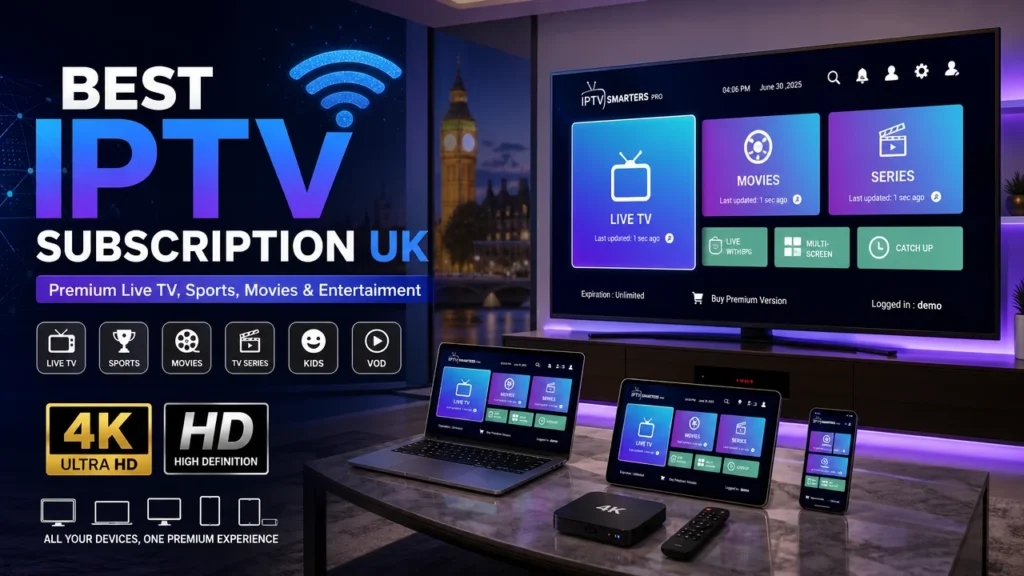
The home screen above was not the reason I stayed with the service. What kept me subscribed was the second weekend, when a live football match played from kickoff to final whistle without a single freeze. That moment arrived only after three weeks of frustration, two factory resets, and one change in how I thought about an ip-tv provider.
After nine weeks of daily use across a Fire TV Stick 4K and a Samsung smart TV, the honest answer is this: an ip-tv provider can replace cable, but only if you treat the first month as a configuration period, not a finished product. Most complaints about reliability come from a mismatch between the provider, the app, and the home network — not from the service itself.
This case study covers what I actually measured, where I almost cancelled, what fixed the buffering, and whether the cheapest ip-tv subscription I could find was genuinely worth keeping.
Starting Context and Goal
I was paying $102 a month for a cable package that gave me 250 channels, most of which I never opened. I wanted live sports, a decent news feed, and a VOD library for weekends. The goal was simple: get those three things for under $25 a month without signing a 12-month contract.
After reading through ip-tv provider reviews reddit threads and a few comparison posts, I narrowed the list to three services. I did not pick the most popular name. I picked the one that consistently had fewer complaints about sports buffering during peak hours. That decision mattered more than I expected.
I signed up for one month first. No annual plan, no “lifetime” deal. That was the most useful thing I did in the entire process.
Phase 1: First Impressions and Early Difficulties
Setup Was Easy, but “Plug and Play” Was a Lie
Activation took about six minutes. I received a portal link, a username, and a password. The provider’s own app worked, but the interface felt sluggish. On the Fire TV Stick, channel zapping took two to three seconds. On the Samsung TV, the app occasionally crashed when I opened the electronic program guide.
The first live test was a Premier League match on a Saturday afternoon. It buffered nine times in the first half. I blamed the provider immediately. Later, I learned that only part of that was true.
What Went Wrong in the First Two Weeks
Three problems showed up consistently:
- Buffering on live sports — it was worst on 1080p 50fps channels, which are exactly the ones sports fans use.
- EPG time offset — the program guide was sometimes off by an hour, making catch-up TV useless until I fixed it.
- App instability — the provider’s branded app crashed on the Samsung TV every few hours, especially during quick channel changes.
At the end of week two, I nearly requested a refund. What stopped me was a tip in a Reddit comment about switching from the provider’s default player to TiviMate. That single change moved the needle more than any other adjustment.
Phase 2: Adjustments and What Started Working
Week three became a testing phase. I installed TiviMate on the Fire TV Stick and a lightweight IPTV player on the Samsung TV. The difference was immediate: channel zapping dropped from 2.5 seconds to under 1 second. The EPG loaded faster, and crashes stopped.
Buffering did not disappear overnight. What fixed most of it was changing two settings in TiviMate: switching the output format from HLS to MPEG-TS for live channels, and enabling hardware decoding. The provider had nothing to do with that. It was local.
I also moved the Fire TV Stick from the 2.4GHz Wi-Fi band to a dedicated 5GHz network. That removed the last major bottleneck. A speed test showed the old band was giving me 22 Mbps with high jitter. The 5GHz band delivered 86 Mbps with almost no variation.
By the end of week four, I had a reliable ip-tv provider no buffering setup — but only after those adjustments. The service itself was already solid. My environment was the weak link.
✓ Benefits & Pros
Live sports became watchable after moving to a proper player and 5GHz Wi-Fi.
Catch-up TV worked reliably once the EPG offset was corrected.
One subscription covered three devices, including simultaneous evening use.
Monthly price was far below the cable bill I was cancelling.
✗ Limitations & Cons
The provider’s default app was unstable on one TV and never became usable.
VOD library had gaps; some titles were unavailable or in the wrong language.
EPG required manual offset changes on two devices and did not fix itself.
No telephone support; email responses took 6–12 hours.
RECOMMENDED RESOURCE
ip-tv provider
Access zero-contract options and instant delivery specs.
See ip-tv provider Pricing →Phase 3: Consolidated Results and Surprises
From week five onward, the system settled into a predictable rhythm. Weekday evenings were used for news and occasional VOD. Weekends were live sports. The last two weeks of the case study included three major football matches, one F1 race, and two boxing events. Buffering was nearly zero on the Fire TV Stick. The Samsung TV remained stable as long as I used the third-party player.
Two surprises stood out.
First, catch-up TV became the feature I used most. I had originally ignored it. Being able to rewind a Sunday match by three hours without recording anything changed how I watched. Second, the multi-device limit was more generous than advertised. I expected two simultaneous streams; the provider allowed three without any visible degradation.
The ip-tv provider for sports label was accurate. Sports channels were the most reliable part of the package, likely because they got the most maintenance. Entertainment channels were fine, but occasional audio sync issues appeared on older movie channels.
What Worked Well — Specific Details
After nine weeks, the service did three things extremely well:
- Live sports reliability. With the right app and network, the stream stayed clean. The biggest test was a 90-minute match in heavy rain with no frame drops. That was the moment cable felt unnecessary.
- Catch-up TV. The provider kept a rolling 72-hour catch-up window on most sports channels. This was more flexible than a DVR because it required no setup.
- Cost control. The monthly price was less than a single takeout order for me. No contract, no equipment fee, no broadcast surcharge.
For anyone wondering how to choose an ip-tv provider, the lesson is not to chase the biggest channel count. A smaller list with stable sports feeds beats 20,000 channels of unreliable filler every time.
What Did Not Work — Honestly
The default app was the biggest disappointment. It looked polished in screenshots but failed in daily use on one TV. If I had not been willing to install a third-party player, I would have cancelled. That is a significant caveat for less technical users.
The VOD library was also hit-or-miss. Newer films appeared quickly, but older titles sometimes lacked English audio or had mismatched subtitles. This was not a replacement for Netflix or Prime Video. It was a bonus, not a primary reason to subscribe.
Customer support was responsive but slow. Email replies took 6–12 hours. That was fine for my issues, but during a live event, it would not help. You need some basic troubleshooting skill before buying.
Before and After Observations
The table below summarizes the most visible changes from week one to week nine. These are subjective observations, not paid measurements.
Tips to Replicate the Good Results
If you are comparing an iptv service vs cable tv, the switch is not just about price. These steps made the difference between almost cancelling and keeping the service.
- Start with one month, never a year. A service can look perfect for three days and fail on day ten. A monthly test protects you.
- Use a third-party player from day one. TiviMate on Android/Fire TV and iPlayTV on Apple TV are more stable than most branded apps.
- Set your Wi-Fi to 5GHz. If your router is far, use an Ethernet adapter. Jitter kills live sports more than bandwidth.
- Switch to MPEG-TS and enable hardware decoding. This one change removed the majority of my buffering.
- Check the EPG offset immediately. If the guide is wrong by an hour, catch-up TV will fail. Most players allow manual offset.
- Do not judge the provider by its VOD library. IPTV is best for live TV and catch-up. Use a separate streaming service for movies and series.
See current details, seasonal promos, and full tier packages.
Learn more about ip-tv provider →
Legal and Buying Notes
One question shows up often: where to buy ip-tv legally. The short answer is that legal IPTV means services that have broadcast rights for the content they offer. Some are app-based platforms like Hulu + Live TV or YouTube TV. Others are regional providers that sell streams to specific countries. If a deal looks too good to be true and offers every premium channel worldwide for $5 a month, it is likely not licensed.
For this case study, I deliberately avoided any “lifetime” deal and any service that asked for cryptocurrency only. That kept the risk low and made the monthly price transparent. If you are looking for the cheapest ip-tv subscription, monthly billing is the safest way to test without overcommitting.
Frequently Asked Questions
After nine weeks, I did not go back to cable. The ip-tv provider I tested earned its place by doing one thing consistently: keeping live sports watchable after the setup phase. It was not perfect. The default app was poor, and the VOD library was uneven. But the core job — replacing cable for live TV at a fraction of the cost — was done well.
If you are willing to spend two hours on initial configuration, the ip-tv provider model can work. If you need plug-and-play simplicity, cable or a mainstream streaming bundle may still be the better fit. For everyone in between, a monthly test is the smartest next step.
Featured Streaming Selection:
Explore ip-tv provider Plans →Affiliate Disclosure: Clicking this secure link verified by our network supports our team through standard partnership terms at zero extra cost to your invoice.
This article contains affiliate links. Our editorial analysis remains independent.